1)차배근, 『설득커뮤니케이션이론』, (서울: 서울대학교출판부, 1989), 3-6면.
2)James B. Stiff, Persuasive Communication, (New York: The Guilford Press, 1994), p.108.
3)차배근, 앞의 책, 253-254면.
4)Erwin P. Bettinhaus & Michael J. Cody, Persuasive Communication, 4th ed.(New York: Holt, Reinhart and Winston, Inc., 1987), p.154.
5)Marc G. Weinberger and Harlan E. Spotts, "Humor in U.S. vs U.K. TV Advertising," Journal of Advertising, Vol.18(2), 1989, pp.39-44.
6)오리콤, 1998년 크리에이티브 키워드: 현실도피와 현실직시의 갈림길, {cited 1999.9.22}. <http://www.oricom.co.kr/insight04/keyword1.html>
7)서범석, 1997년 국내 및 세계 광고계 결산, 『Cheil Communication』, 1997. 12, 14-15면.
8)이화자, 김태호, 광고의 대상과 제품관여도에 따른 유머소구광고의 활용에 관한 연구, 한국방송광고공사, 『광고연구』, 제39호, 1998년 여름, 74면.
9)강연선 외, 『세계철학대사전』, (서울: 교육출판공사, 1992), 849면.
10)홍대식 역, 『심리학 개론』, (서울: 박영사, 1991), 153면.
11)이태봉, "유머 광고의 효과에 관한 연구", 석사학위논문, 강원대학원 경영학과, 1996, 6-8면.
12)이두희, 『광고론』, (서울: 박영사, 1998), 173면.
13)김용환, 광고에 있어서 유머 소구의 효과에 관한 연구, 석사학위논문, 연세대학원 경영학과, 1993, 6-7면.
14)Willam J. McGuire, "Some Internal Psychological Factors Influencing Consumer Choice," Journal of Consumer Research, Vol.2(March), 1976, pp.303-314.
15)이창우, 김상기, 곽원섭, 『광고심리학』, (서울: 성화사, 1989), 78면.
16)이철, "TV 유머광고에 대한 비교문화적 연구", 한국방송광고공사, 『광고연구』, 제15호, 1992년 여름, 227-237면.
17)Gerger. Athur, "Humor: An Introduction," American Behavioral Scientist, Vol.30(1), 1987, pp.6-16
18)Marc G. Weinberger and Charles S. Gulas, "The Impact of Humor in Advertising: A Review," Journal of Advertising, Vol.21(4), 1992, p.36
19)이글리는 기존의 연구를 설득 단위가 개인이냐 집단이냐에 따라 1)traditional persuasion studies와 2)conformity studies로 나누었다. 전자의 경우 총 62건 중 82%가 성차가 없는 것으로 나타났으며, 후자의 경우에는 62%가 성차가 없는 것으로 나타났다. 이러한 결과로 볼 때, 여성이 남성보다 현저하게 설득되기 쉽다는 기존의 통설은 잘못되었다고 볼 수 있으며, 이러한 연구들의 대부분이 여성운동이 시작되기 이전이 1970년대 이전에 이루어졌음을 지적하였다. 즉 연구의 토픽이 기계류, 운동경기와 같은 성차편향적인 주제들로 이루어져 있었기 때문에 이러한 차이를 불러 일으켰다. James B. Stiff, op. cit., pp.132-135.
20)Zhang and Young, "The Moderating Effect of Need for Cognition," Journal of Advertising, Vol.25(1), 1996, pp.24-25.
21)장경숙, "인지욕구에 따른 유머광고 효과 분석", 석사학위논문, 중앙대학원 신문방송학과, 1997, 23-26면.
22)Dana L. Alden, Wayne D. Hoyer, and Chol Lee, "Identifying Global and Culture Specific Dimensions of Humor in Advertising: A Multinational Analysis", Journal of Marketing, Vol.57(2), 1993, pp.74-76.
23)단 효과분석에서 성별을 고려하고자 할 때는, 제시되는 유머소구의 유형을 밝혀야 한다. 다양한 유머소구(성적인 소구, 말장난 등)의 유형에 따른 성별의 차를 살펴봐야 할 것이다. 성적인 암시를 풍기는 유머소구에 대한 효과의 차를 전체 일반적인 유머소구에 대한 효과의 차이로 보는 것은 타당하지 않다.
24)Thomas J. Madden and Marc G. Weinberger, op. cit., p.23-29.
25)Scott. Cliff, David M. Klein and Jennings Bryant, "Consumer Response to Humor in Advertising: A Series of Field Studies Using Behavioral Observation," Journal of Consumer Research, Vol.16(Mar), 1990, pp.498-501.
26)Harlan E. Spotts, Marc G. Weinberger and Amy L. Parsons, "Assessing the Use and Impact of Humor on Advertising Effectiveness: A Contingency Approach," Journal of Advertising, 1997, Vol.26(3). pp.30-31.
27)김용환, "광고에 있어서 유머소구의 효과에 관한 연구", 석사학위논문, 연세대학원 경영학과, 1992, 50-51면.
28)Marc G. Weinberger, "The Use and Effect of Humor in Different Advertising Media," Journal of Advertising Research, Vol.35(3), 1995, pp.44-52.
29)Thomas J. Madden and Marc G, Weinberger, "The Effects of Humor on Attention in Magazine Advertising," Journal of Advertising Research, Vol.11(3), 1982, pp.8-14.
30)이덕희, "유머소구 광고의 커뮤니케이션 효과", 석사학위논문, 중앙대학원 신문학과 광고홍보전공, 1992, 44-56면.
31)Marc G. Weinberger and Leland Campbell, "The Use and Impact of Humor in Radio Advertising," Journal of Advertising Research, Vol.31(Nov/Dec), 1991, pp.42-52.
32)Joanne Cantor and Pat Crompton, "The Effect of Humor on Recall of a Radio Advertisement," Journal of Broadcasting, Vol.24(1), 1980, p.122.
33)Brian Sternthal and Samuel Craig, "Humor in Advertising," Journal of Marketing. Vol.37(4), 1973, pp.12-18.
34)Thomas J. Madden and Marc G. Weinberger, "Humor in Advertising: A Practitioner View," Journal of Advertising Research, Vol.24(4), 1984, pp.23-29.
35)George Brooker, "A Comparison of the Persuasive Effects of Mild Humor and Mild Fear Appeals," Journal of Advertising, Vol.10(4), 1981, pp.29-40.
36)Bryant Jennings, Dan Brown, Alan R. Silverberg and Scott M. Elliott, "Effects of Humorous Illustrations in College Textbooks," Human Communication Research, Vol.8(1), 1981, pp.43-57.
37)유인종, "광고주장의 강도에 따른 유머광고의 효과", 석사학위논문, 중앙대학원 신문방송학과, 1996, 22-25면.
38)Marc G. Weinberger, Harlan Spotts, Leland Campbell and Amy L. Parsons, "The Use and Effect of Humor in Different Advertising Media," Journal of Advertising Research, Vol.35(3), 1995, pp.50-53.
39)George M. Zinkan and Besty D. Gelb, "Humor and Advertising Effectiveness Reexamined," Journal of Advertising, Vol.16(1), 1987, pp.66-68.
40)Dana L. Alden and Wayne D. Hoyer, "An Examination of Cognitive Factors Related to Humorousness," Journal of Advertising, Vol.22(2), 1993, pp.36-38.
41)Richard E, Petty and John T. Cacioppo, Attitude and Persuasion: Classic and Contemporary Approaches, (Iowa: WCB, 1981), p.7.
42)Stuart Oskamp, Attitude and Opinion, (Prentice-Hall, Eaglewood Cliffs, 1977), p.5.차배근, 『태도변용이론』, (서울: 나남출판사, 1992), p.13에서 재인용.
43)Scott B. MacKenzie, Richard J. Lutz, and George E. Belch, "The Role of Attitude Toward the Ad as a Mediator of Advertising Effectiveness," Journal of Marketing Research, Vol.23(May), 1986, pp.131-133.
44)Michael L. Ray, Advertising and Communication, (New Jersey: Prentice-Hall, 1982), p.173.
45)마케팅의 목표와 광고의 커뮤니케이션 목표의 비교
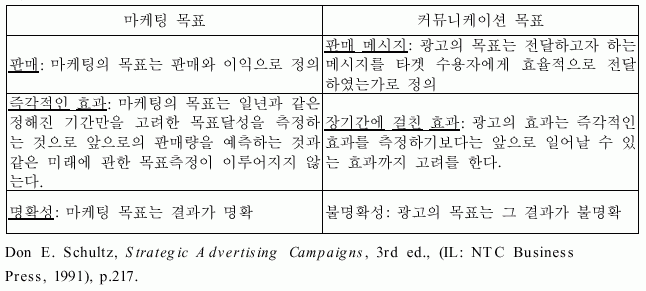
46)중요도는 역순으로 하고 측정하기가 쉬운 것부터 배열 가능한 광고의 목표는 다음과 같다.
·노출(exposure): 광고주는 흔히 일정기간에 표적 시청자에게 일정회수의 광고를 노출시킬 목표를 결정한다. 노출이란 시청자나 구매자 중 표적대상이 되는 사람이 실제로 그 광고를 본 것이 아니라 광고를 전달하는 매체에 한 번 접촉한다는 것을 말한다. 만일 동아일보를 백만 명이 읽었다고 하면 그 날 신문에 실린 광고는 백만의 노출을 성취했다고 할 수 있는 것이다. 실제로 그 광고를 목격하고 주위를 환기시켜 관심을 가지고 읽었느냐 또는 인지했느냐 여부는 별문제인 것이다.
·인지(awareness): 표적시청자나 구매자가 실제로 광고를 들었거나 읽었다는 것을 알면 광고주는 더욱 자신감을 갖게 될 것이다. 이때 어느 수준의 시청자를 인지시키겠다는 목표를 설정할 수 있는 것이다. 광고 캠페인의 성공은 시청자나 구매자의 광고 기억이나 인지도의 조사를 통해서 측정할 수 있는 것이다.
·태도(attitude): 광고주가 표적대상에게 광고를 통해서 성취하고자 하는 일정수준의 호의적 태도를 규정하게 되면 고도의 목표가 설정된다.
·매출액(sales): 기업은 광고로써 달성할 일정수준의 매출액을 목표로 설정하게 된다.
송용섭, 김형순, 『New 마케팅』, (영문사: 서울, 1998), 586-587면.
47)이강원·박원기 「광고효과와 매체기획 계량적 접근」, (서울: 엘지애드, 1995), pp.28-29
48)서범석, 『광고기획론』, (서울: 나남, 1998), 240면.
49)수용자가 메시지를 받아들여서 회사, 상품, 브랜드를 인지하고 구매까지 도달하는 단계는 여러 모델들에 의해서 분석되고 있다. ①AIDA 모델은 개인판매에서 판매원이 소비자를 소비의 단계에까지 유도하기 위한 설득과정을 설명하고 있다. 판매원은 우선 소비자에게 주목을 불러일으켜야 한다. 그 다음에 자사의 상품이나 서비스에 대해서 흥미를 유발시켜나가야 한다. ②AIDMA 모델은 AIDA 모델과 유사하나 행위이전에 기억의 단계를 한 번 더 거친다고 생각하는 점이 다르다. ③래비지와 스테이너(Robert Lavidge and Gary Steiner)에 의해서 소개된 효과의 하이어라키 모델은 가장 자주 적용되는 모델이다. 초기 인식단계에서부터 실제 구매행위까지에서 광고에 반응하는 소비자의 반응을 설명하고 있다. 광고효과는 즉각적인 구매와 같은 행동반응을 불러일으키지는 못하지만, 다른 효과들이 순차적으로 발생을 하여, 각 단계의 효과를 거쳐 소비자들은 소비행위로 이끈다. ④개혁확산모형은 신제품이 소비자들에게 전파되는 과정을 설명하고 있다. ⑤맥과이어(William McGuire)에 의해서 발전된 정보처리모델은 광고와 같은 설득메시지의 수용자들은 정보처리자 혹은 문제해결자로 간주하고 있다. 이 모델은 앞의 효과의 하이어라키 모델과 유사한 구조를 이루고 있다. 하지만 맥과이어의 모델에서는 다른 모델에서 찾아볼 수 없는 파지의 단계를 갖고 있다. 파지의 단계에서는 즉각적인 반응이 아닌 앞으로의 행동을 결정하는데 유용한 정보를 제공한다. George E. Belch and Michael A. Belch, Advertising & Promotion: integrated marketing communications perspective, 3rd ed. (Chicago: IRWIN, 1995), pp.163-171.
50)로진남, "수용자 관여가 광고 인지와 태도 형성에 미치는 영향", 석사학위논문, 서강대학원 신문방송학과, 1993, 6면.
51)Scott B. Mackenzie, Richard J. Lutz, and George E. Belch, "The Role of Attitude Toward the Ad as a Meditator of Advertising Effectiveness: A Test of Competing Explanations," Journal of Marketing Research, Vol.23(May), 1986, pp.130-132.
52)이 그림은 본 연구자가 기존의 연구모형과 이 연구의 기본적 이론의 틀을 접목시켜서 새롭게 제시한 연구모형이다. 화살표는 독립변인이 종속변인에 영향을 미치는 과정을 도식화한 것이며 그 상하의 실선의 굵기는 각 메시지 소구의 효과의 크기를 나타낸 것이다.
53)짝진 표본은 두 분포가 동일한 표본이므로 동일분산을 갖는다. 따라서 동일분산 가정을 levene's test 등으로 검정할 필요가 없다. 김영석, 『사회조사방법론』, (서울: 나남, 1999), p.439.